TL;DR
- Energy-efficient windows in Florida produce real savings — but not the headline numbers some marketing materials suggest.
- Annual electricity savings depend on the home and replacement specifications. The worked example below uses unverified assumptions to illustrate the calculation, not to establish a typical Jacksonville result.
- The federal Section 25C tax credit that previously offered up to $600 for windows expired December 31, 2025. It's no longer part of the math for 2026 projects.
- The strongest case for energy-efficient windows in Florida combines modest energy savings with measurable improvements in comfort, humidity control, home value, and reduced HVAC strain.
- For homes with original builder-grade windows from the 1995–2010 era, the case is generally clear. For newer or recently upgraded homes, the math is harder to justify on energy alone.
"Are energy-efficient windows worth it?" is the question every Jacksonville homeowner asks once they start getting quotes. The answer in 2026 is meaningfully different than the answer would have been a year ago, primarily because the federal tax credit picture changed. This post walks through what's actually true about energy-efficient window economics in Florida — without the marketing inflation, and without the dismissive cynicism that pretends the savings aren't real.
What "Energy-Efficient" Actually Means in 2026
The window industry uses "energy-efficient" loosely. Two technical standards anchor what the label actually means:
ENERGY STAR certification identifies independently certified products meeting climate-specific performance requirements set by EPA. Verify the applicable climate zone and the exact proposed window; both U-factor and SHGC requirements matter. Ordinary ENERGY STAR certification is also distinct from the Most Efficient requirements that applied to the former Section 25C window credit. Related technical guidance.
NFRC labels — The National Fenestration Rating Council labels every certified window with measured performance numbers:
- U-factor measures heat transfer through the window (lower is better for both hot and cold climates)
- SHGC measures the fraction of incident solar radiation admitted through the window, including directly transmitted energy and absorbed energy subsequently released indoors. Lower values reduce solar heat gain.
- VT (Visible Transmittance) measures how much visible light passes through (higher means brighter interiors)
- Air Leakage measures how much air passes through the assembly (lower is better)
For a Jacksonville home, compare the actual whole-window SHGC and U-factor ratings and verify current certification for the applicable climate zone. Window age alone does not establish an SHGC range, and a generic 0.25–0.30 range should not be presented as current Southern-zone ENERGY STAR criteria. A lower SHGC is not the same thing as an equal percentage reduction in whole-home cooling energy.
What Energy-Efficient Windows Actually Save in Florida
Let's run an illustrative calculation. The inputs below are assumptions, not verified typical Jacksonville bills or measured window-replacement results:
Illustrative baseline: a 2,200 sq ft single-family home with older builder-grade windows. Assume a $300 summer monthly electric bill and $2,800 in annual electricity charges. Confirm the provider serving the address rather than assuming FPL; separate fixed charges when preparing an actual savings estimate.
Assumed annual cooling share: 55–65% of the $2,800 electricity charges, giving $1,540–$1,820 attributable to cooling. This is a modeling assumption, not a measured local cooling share.
Window contribution to cooling load: windows affect heating and cooling demand, but this post does not establish a 30–40% contribution for older Jacksonville homes. A window-related load share is not itself an achievable replacement-savings percentage. Related technical guidance.
Assumed replacement benefit: a 15–25% reduction in cooling energy use, used only as a sensitivity input. This is not a verified typical Jacksonville result or a guaranteed outcome for ENERGY STAR-certified windows.
Illustrative annual cooling savings: $231–$455, calculated as $1,540 × 15% through $1,820 × 25%, assuming proportional variable electricity charges. This does not establish a typical annual result; heating savings, fixed charges, rate changes, and household behavior require separate treatment.
Those figures are outputs of the stated assumptions, not measured household savings. Future savings and window service life vary; simply adding annual savings over time is not the same as compounding an investment return.
The Federal Tax Credit Changed in 2026
For tax years 2023 through 2025, the Section 25C Energy Efficient Home Improvement Credit offered a credit equal to 30% of qualifying window expenses, subject to a $600 annual limit for windows and skylights combined. Windows had to meet ENERGY STAR Most Efficient requirements, not merely ordinary ENERGY STAR certification. Installation labor did not qualify, and other eligibility requirements applied.
The One Big Beautiful Bill Act (OBBBA) accelerated the termination of that credit — windows installed and placed in service after December 31, 2025 no longer qualify. We covered this in detail in our companion post on actual electric bill savings after window replacement. Related technical guidance.
For homeowners evaluating window projects in 2026, this means:
- The headline savings calculator that included $600 in federal tax credit no longer applies
- Window quotes from companies still citing the credit are using outdated information
- The case for replacement now rests on utility savings, comfort, home value, and avoided costs — not on tax-time recovery
The credit's expiration doesn't make energy-efficient windows a worse decision. It just means the case has to stand on the substantive benefits, not the rebate.
Beyond Utility Bills: The Full Value of the Project
Using an illustrative project cost of $14,000–$22,000 and the $231–$455 annual savings calculated above, simple utility-only payback would be approximately 31–95 years. These are assumed inputs, not typical local results, and the calculation excludes financing, discounting, maintenance, and replacement costs. Comfort, condition, and possible resale benefits should be evaluated separately rather than treated as guaranteed financial returns.
Home value impact
Window replacement may influence resale value, but this post does not establish a specific recovery percentage or a ranking against other renovations. Any Cost vs. Value estimate should identify the report year, geography, and project definition, and cannot guarantee the proceeds from an individual sale. Related technical guidance.
Buyers and inspectors may consider aging or damaged windows. Whether replacement before a sale is worthwhile depends on condition, quotes, comparable sales, and likely buyer expectations; it should not be assumed to recover its cost or avoid an even larger price reduction.
Comfort and humidity control
This is the benefit that's hardest to put on a spreadsheet and that homeowners most often mention after a project completes. New windows in a Florida home produce:
- Lower temperature variability between rooms (especially between south-facing and north-facing rooms)
- Less hot-spot effect from direct sun exposure
- More consistent humidity levels throughout the home, because the AC isn't fighting continuous air infiltration
- Quieter interiors (reduced sound transmission from outside)
- Better window operation — locks that work cleanly, sashes that glide
These aren't financial returns in the strict sense. They're quality-of-life returns. For homeowners who plan to stay in the home for years, they matter as much as the electricity savings.
Reduced HVAC strain
Excess solar heat gain and air infiltration can increase the cooling load an AC system must handle. The effect on run time and cycling depends on equipment sizing, controls, and other building loads; it does not establish a particular maintenance cost or equipment lifespan.
Energy-efficient windows can reduce window-related cooling loads, but no study is identified here to support a 1–3-year extension of HVAC life or guaranteed maintenance savings. Treat any such avoided costs as unquantified potential benefits, not additions to the payback calculation.
Avoided water and structural damage
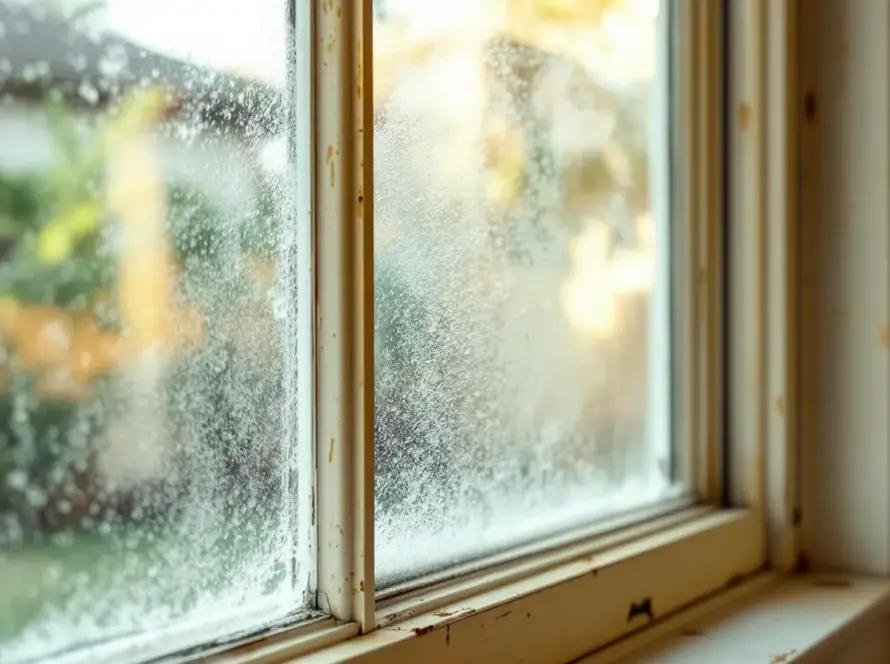
Leaks at window installations can allow water into walls and require repairs, with costs depending on the damage and scope. Fogging between panes indicates an insulated-glass seal problem but does not by itself establish a leak into the wall. Properly installed replacement windows can address diagnosed window-related leaks; they do not eliminate all future water-intrusion risk. Obtain a condition-specific repair estimate rather than assuming a generic cost.
When the Case Is Strong, and When It Isn't
Energy-efficient window replacement makes the strongest financial sense in these situations:
- Original builder-grade windows from 1995–2010 that are showing visible aging, seal failure, or operational issues
- South- or west-facing windows with high solar exposure and no Low-E coating
- Homes with rising cooling bills that aren't explained by AC age, rate increases, or usage changes
- Single-pane windows (still found in some older Jacksonville homes) where the upgrade to current double-pane Low-E is dramatic
- Pre-sale renovations where buyer-side perception of original windows hurts the asking price
- Homes with comfort issues — hot rooms, drafty spaces, persistent humidity — that trace back to the window envelope
The case is weaker in these situations:
- Homes with windows less than 10 years old that are still performing well
- Homes where windows were upgraded in 2008–2010 or later to early-spec energy-efficient products
- Homeowners planning to sell within 1-2 years who can't capture the comfort and humidity benefits
- Project budgets that would require taking on debt at high interest rates for marginal efficiency gains
- Homes with comfort issues that trace to other causes — undersized AC, attic insulation deficits, ductwork problems — rather than windows specifically
The honest answer to "are energy-efficient windows worth it" depends on which of these descriptions fits your home. For a 2003 Jacksonville home with the original builder-grade single-pane windows, multiple failure signs, and electric bills creeping up year after year — the case is strong. For a 2018 home with recently installed double-pane Low-E windows in good condition — there's no case.
What an Honest Estimate Should Include
If you're getting estimates from window companies in 2026, here's what a credible quote looks like:
- Specific product specifications with NFRC labels showing U-factor, SHGC, VT, and Air Leakage values
- ENERGY STAR certification status for the Southern Climate Zone specifically
- Realistic energy savings ranges — companies that quote specific dollar figures should explain the assumptions
- Total project cost broken out by windows, installation, permit fees, and disposal
- Manufacturer warranty terms in writing — limited lifetime is common but check what "lifetime" actually means in the document
- Workmanship warranty terms from the installing contractor
- No reference to the expired Section 25C federal credit for 2026 projects
- License verification — DBPR license number for the contractor performing the installation
A company that's confident in its product and pricing will provide these without being asked. A company that gets evasive when you ask about NFRC ratings or warranty details is signaling something worth noting.
How Lifetime Windows Approaches the Conversation
We talk about energy savings in honest ranges because the right answer for any specific home depends on the variables we've covered. Our typical Jacksonville consultation includes:
- A walk-through of each window with attention to orientation, condition, and current performance
- Discussion of your specific electric bill pattern and where current windows are contributing
- Product recommendations matched to your home's architecture, orientation, and budget
- Written estimates with NFRC product specs, warranty terms, and realistic energy-savings ranges
We use in-house licensed installation crews — not subcontractors — and pull permits on every project. The result is a longer accountability chain on warranty issues and proper documentation for any future claim.
If you want to think through whether the energy-efficient window case is strong for your specific home, schedule a free consultation. For projects where budget pacing matters, we have financing options that can structure the project without forcing a single-payment commitment.
Frequently Asked Questions
How long does it take to break even on energy-efficient windows in Florida? There is no single verified local breakeven period in this post. With an illustrative $14,000–$22,000 project cost and $231–$455 in annual savings from the stated assumptions, simple utility-only payback is approximately 31–95 years. Actual results require your quote and a home-specific estimate. Comfort, window condition, and possible resale benefits matter too, but no resale recovery percentage or guaranteed overall return is established here.
Do I need impact windows or are standard ENERGY STAR windows enough for Florida? ENERGY STAR certification concerns energy performance, not impact protection. Impact-rated and non-impact products with similar whole-window U-factor and SHGC ratings can have comparable energy performance. Required opening protection depends on the site, design, approved products, and applicable code. Confirm requirements with the contractor and building department; neither an inland address nor an ENERGY STAR label alone establishes that a non-impact window is suitable. Ask your insurer separately about any premium credit.
What's the difference between double-pane and triple-pane windows in Florida? An additional pane can change insulation, weight, visible light, and cost, but the benefit depends on the complete window configuration. Compare whole-window NFRC ratings, climate-zone certification, daylight needs, and actual installed quotes rather than assuming either pane count is always the better value.
Should I replace my windows now or wait for new tax credits? Section 25C is unavailable for windows placed in service after December 31, 2025. Do not assume a future credit will be enacted. Base timing on window condition, project economics, and current verified incentives rather than hypothetical legislation.
Can I install new windows myself to save money? Confirm permit, licensing, inspection, and any owner-builder eligibility requirements with your local building department before considering self-installation. Follow the product installation instructions and check the actual warranty terms; this post does not establish a statewide ban on homeowner installation or a universal warranty rule.
How much does a typical full-home window replacement cost in Jacksonville? This post uses $14,000–$22,000 for a 2,200 sq ft home with 12–14 windows as an illustrative budget, not a verified typical local price. Obtain itemized quotes covering specifications, custom sizes, installation, permits, and repairs. Impact-rated or specialty products may change the price; compare actual quotes before choosing a scope or phased approach.
Want an honest assessment of whether energy-efficient windows make sense for your specific Jacksonville home? Contact Lifetime Windows for a no-pressure consultation.