

TL;DR
- Window age is a reason to inspect condition, seals, operation, and performance, not an automatic replacement deadline. Exposure, materials, installation, and maintenance all matter.
- The clearest signs: rising energy bills, drafts with windows closed, foggy glass between panes, difficulty operating, visible frame damage, UV fading of interior surfaces, and excessive outside noise
- In Jacksonville's summer heat, inefficient windows force your AC to work significantly harder — and your energy bills show it
- According to the U.S. Department of Energy, windows account for 25 to 30% of a home's heating and cooling energy loss
- Lifetime Windows has been serving Northeast Florida homeowners since 1990 — free in-home consultations, no pressure
There's a version of this conversation that happens in Jacksonville every summer. A homeowner notices their electric bill climbing, assumes it's just the heat, turns the thermostat down another degree, and moves on. The bills keep climbing. The house never quite gets comfortable on hot afternoons. The AC runs all day.
Sometimes the problem is insulation. Sometimes it's the HVAC system. But a significant number of the time, the problem is the windows — and the homeowner has no idea.
Windows are easy to overlook because they rarely fail suddenly. A water heater makes noise before it goes. An AC unit stops working on the hottest day of the year. Windows just quietly get less effective, year by year, until the house is working harder than it should to stay comfortable.
This guide covers the seven most common signs your Jacksonville home needs new windows — and explains why Florida's climate makes each one more urgent than it would be in other parts of the country.
Why Window Age Matters More in Jacksonville
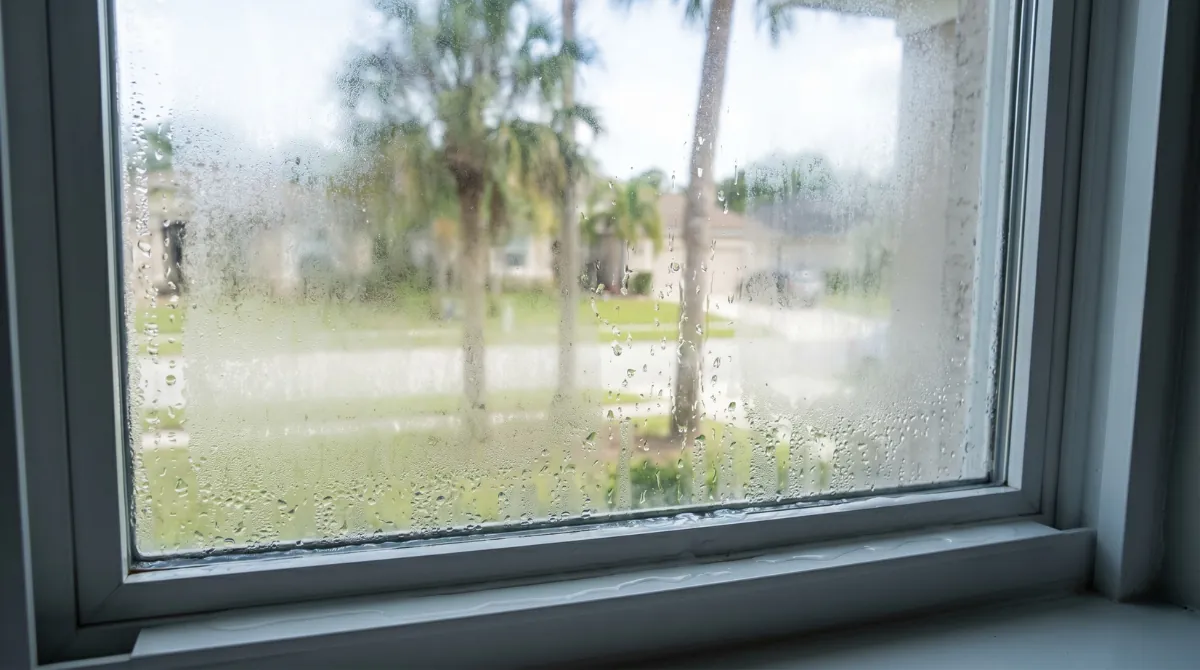
Window service life varies by product, installation, maintenance, and exposure. Older units deserve inspection for deteriorated seals, frame damage, air leakage, and operating problems rather than replacement based on age alone.
The U.S. Department of Energy estimates that windows account for 25 to 30% of a home's heating and cooling energy loss. In Jacksonville — where air conditioning runs eight to nine months of the year — that number translates directly to real money on every electric bill.
Jacksonville homes built in the late 1990s and early 2000s are now prime candidates for replacement, even if the windows haven't visibly failed. The seals degrade. The frames lose rigidity. The low-E coatings on older glass wear down. None of this is dramatic — it's just the slow erosion of performance that adds up to hundreds of dollars a year in excess cooling costs.
Sign #1: Your Energy Bills Keep Climbing — Without a Clear Reason
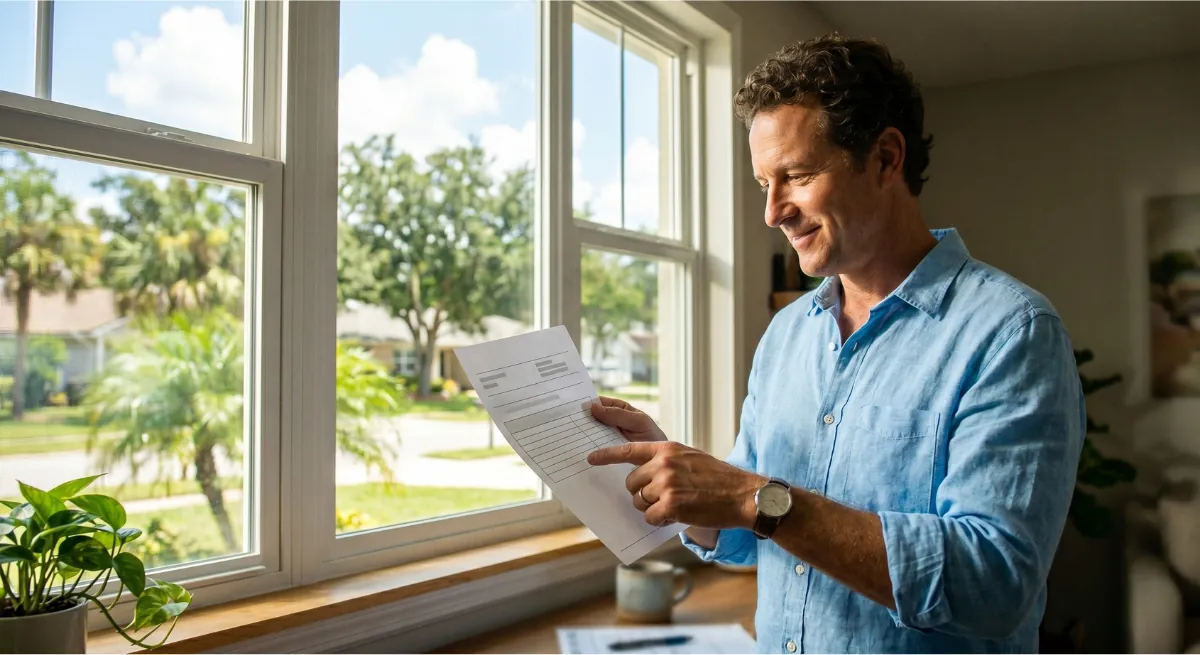
This is the sign most people notice first, and the one they're least likely to connect to their windows.
When window seals fail and frames develop small gaps, conditioned air escapes and outdoor heat seeps in. Your AC compensates by running longer. Your bill goes up. You call the HVAC company, they tell you the system is fine, and the bills stay high.
According to ENERGY STAR data on window replacement savings, replacing single-pane windows with ENERGY STAR certified models can save Florida homeowners hundreds of dollars annually in cooling costs. Even upgrading from older double-pane windows to modern low-E units produces measurable savings in Jacksonville's long cooling season.
Properly specified and installed replacement windows can reduce energy use and improve comfort. The size of the change depends on the old windows, new products, home envelope, orientation, and HVAC use; no fixed local percentage applies to every home.
What to do: Check your last 12 months of utility bills against the prior year. If costs have risen without an obvious cause — no new appliances, no change in thermostat settings — start with a window inspection.
Sign #2: You Feel Drafts With the Windows Closed
This one is unmistakable. You're sitting near a window on a July afternoon and you can feel the hot air pushing through.
Drafts around closed windows mean the seals have failed, the weatherstripping has deteriorated, or the frame has warped enough to create gaps. In Jacksonville's summer heat, a drafty window isn't just uncomfortable — it's a direct pipeline between the 95° outside air and your conditioned interior.
Run your hand slowly around the interior perimeter of each window frame on a hot day. Heat infiltration is usually detectable by touch, even if you can't feel a visible breeze. A lit incense stick held near the frame edge will show air movement clearly.
Sign #3: Foggy or Cloudy Glass Between the Panes
If you see condensation, haziness, or visible fogging between the panes of a double-pane window, the insulating seal has failed.
Double-pane windows work because the sealed space between the panes — typically filled with argon gas — provides insulation. When that seal breaks, the gas escapes, moisture enters, and condensation forms inside the sealed unit. That foggy appearance isn't just cosmetic: it means the window's insulating capacity is gone.
A failed seal on a double-pane window can sometimes be repaired by replacing just the glass unit. But in many cases — particularly on older windows where the frames are also degrading — full window replacement is the more practical and cost-effective path.
Sign #4: The Windows Are Hard to Open, Close, or Lock
Windows that stick, won't latch properly, or require significant force to operate aren't just annoying — they're a safety and security issue.
Frame warping is the most common cause. In Jacksonville's humidity, window frames that aren't designed for Florida's moisture exposure absorb water over time and swell, warp, or shift out of square. The result is a window that binds in its track, won't seal fully when closed, or can't be locked properly.
A window that won't lock is a straightforward security concern. A window that won't seal fully is also a continuous energy drain, since even a slightly open window defeats your AC's ability to maintain temperature efficiently.
Sign #5: Visible Frame Damage, Rot, or Deterioration
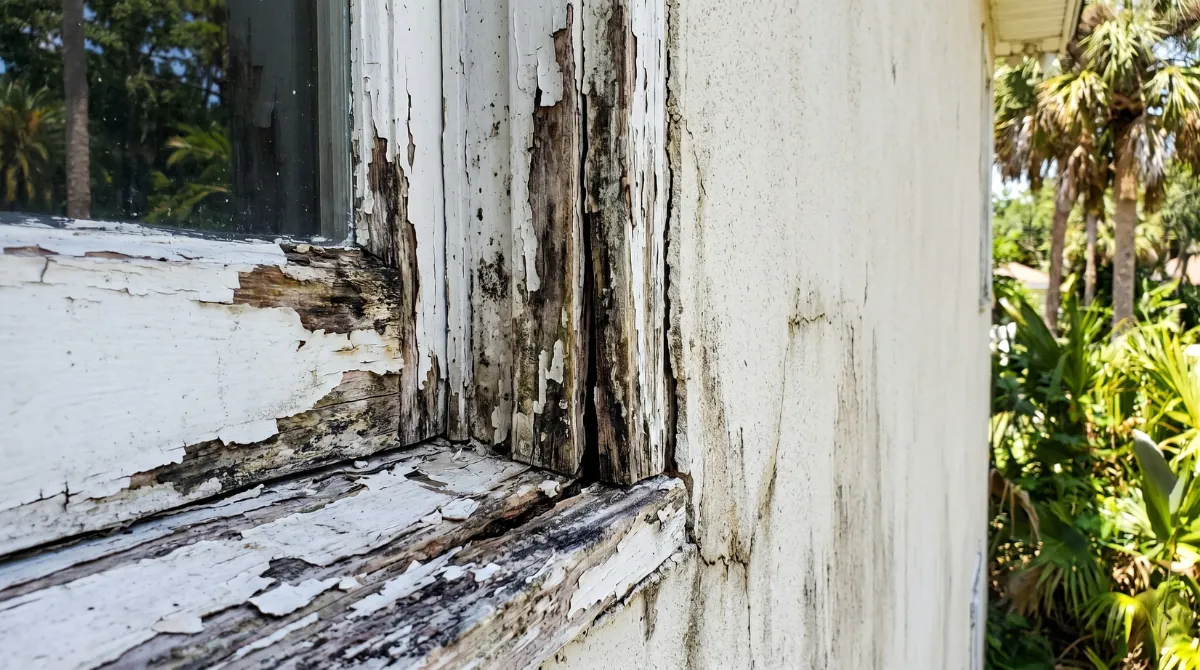
This one is visible on inspection. Look at your window frames — both interior and exterior — for:
- Soft or spongy material around the frame (a sign of water intrusion and rot in wood frames)
- Cracking or chalking on vinyl or aluminum frames (UV degradation)
- Discoloration or staining along the frame or sill (water infiltration)
- Separation between the frame and the wall opening
- Rust on metal components of aluminum-framed windows
Frame deterioration doesn't just affect appearance. A compromised frame allows water and air infiltration at the edges — often the least-noticed and most damaging form of window performance loss.
Vinyl frames, properly specified for Florida's climate, resist warping, rotting, and UV degradation significantly better than wood or standard aluminum. Lifetime Windows installs vinyl replacement windows designed and rated for Northeast Florida's heat, humidity, and UV exposure.
Sign #6: Your Floors, Furniture, or Fabrics Are Fading
This is a sign that most homeowners attribute to "just how it is" — but it's actually a measure of how much UV is penetrating your windows.
Older window glass, even double-pane, transmits significant UV radiation. Over years, that UV fades hardwood floors, bleaches fabric upholstery, and discolors artwork and cabinetry near windows. Modern low-E glass coatings block up to 99% of UV rays, dramatically reducing interior fading.
In Jacksonville homes with significant south- or west-facing window exposure, UV fading of floors and furnishings is a real cost — one that often isn't factored into the "is window replacement worth it" calculation. New windows with quality low-E coatings protect the interior of your home, not just your energy bills.
Sign #7: Excessive Outside Noise Penetrating the Home
This one matters most for homeowners near busy roads, flight paths, or neighborhoods with significant ambient noise — all common in Jacksonville's rapidly growing suburban corridors.
Single-pane windows and older double-pane windows with failed seals provide minimal sound attenuation. Modern double-pane windows with quality frames and properly sealed installations significantly reduce noise transmission.
If you're sleeping in a bedroom that faces a busy road, or working from home in a room where traffic or neighborhood noise makes concentration difficult, upgrading to quality replacement windows can produce a noticeable improvement in interior quiet — independent of any energy savings.
What to Look for in Replacement Windows for Jacksonville
Once you've confirmed replacement is warranted, the key features to prioritize for Northeast Florida:
Low-E glass coating. This is non-negotiable in Florida. Low-E (low-emissivity) coatings reflect solar heat while allowing visible light through. In Jacksonville's sun-intense climate, low-E glass is the single feature that most directly reduces heat gain and cooling costs. Modern low-E glass can block up to 72% of solar heat energy from entering the home.
Double-pane with argon gas fill. The standard for energy-efficient replacement windows — dual panes with an insulating gas fill reduce heat transfer through the glass significantly. Triple-pane is available but generally not necessary in Florida's climate; the cost-to-benefit ratio favors quality double-pane with superior low-E coating for most Jacksonville homes.
Vinyl frames. Vinyl is the dominant frame material for Florida replacement windows — it resists warping, rotting, and UV degradation, requires minimal maintenance, and provides better thermal performance than aluminum. Properly formulated vinyl frames designed for Florida's UV exposure maintain their appearance and dimensional stability for decades.
Florida climate zone ratings. Every replacement window carries ratings from the National Fenestration Rating Council (NFRC) that include U-Factor (insulation), Solar Heat Gain Coefficient (SHGC), and Air Leakage. For Jacksonville, a low SHGC (0.25 or lower) is the priority — it measures how much solar heat the window allows in. Lower is better for Florida.
Professional installation. The best window performs poorly if installed incorrectly. Improper sealing, flashing, and framing allows moisture infiltration and air leakage that negates the window's rated performance. Lifetime Windows uses experienced installation crews — no subcontractors — to ensure every window performs as rated after installation.
Frequently Asked Questions
How much do replacement windows cost in Jacksonville, FL? Costs vary with window type, size, glass package, opening condition, permitting, installation complexity, and the number of units. Request an itemized, home-specific written estimate instead of relying on an unverified market range. Lifetime Windows offers a free consultation to review the scope and options.
How long does window replacement take? Most whole-home window replacement projects in Jacksonville are completed in one to two days by an experienced crew. Individual window replacements can often be done in a few hours. Lifetime Windows coordinates scheduling to minimize disruption to your household.
Are there financing options for replacement windows? Yes. Lifetime Windows offers financing options to help Jacksonville homeowners manage the cost of window replacement without delaying the project. Ask about current financing during your free in-home consultation.
What's the difference between replacement windows and new construction windows? Replacement windows are designed to install into an existing window opening without removing the surrounding trim or drywall — they use the existing frame as the mounting structure. New construction windows require the full opening and framing to be exposed. For most Jacksonville homeowners replacing existing windows, replacement windows are the right approach: less disruption, lower labor cost, and faster installation.
Do replacement windows require permits in Jacksonville? Permit requirements vary depending on the scope of the project. Lifetime Windows advises on permit requirements during the consultation and handles permit coordination where required.
Will new windows actually lower my energy bills? Yes — if the windows are properly specified and professionally installed. Florida homeowners replacing single-pane windows with ENERGY STAR certified models can see meaningful annual savings on cooling costs. Savings from upgrading older double-pane to modern low-E units are smaller but still measurable in Jacksonville's long cooling season.
What window brands does Lifetime Windows install? Lifetime Windows installs quality vinyl replacement windows designed and rated for Northeast Florida's climate conditions. Contact us for specifics on current product offerings and available options during your free in-home consultation.
Ready for a Free In-Home Consultation?
If your Jacksonville home was built before 2010, your windows are worth a close look — not because they've necessarily failed, but because 15 to 20 years of Florida heat, humidity, and UV adds up quietly.
Lifetime Windows has been serving Northeast Florida homeowners since 1990. We offer free in-home consultations, no-pressure estimates, and experienced installation crews who do the job right. Schedule your consultation at lifetimewindowsjax.com or call us today.

