TL;DR
- Windows account for 25 to 30% of a home's cooling energy loss — in Jacksonville's 9-month AC season, inefficient windows are one of the most expensive performance gaps in the home
- Modern low-E replacement windows can reduce heat gain and improve comfort; actual energy savings depend on the existing windows, products, installation, and home.
- Key technologies: low-E glass coatings, double-pane argon-fill, vinyl frames, and proper NFRC ratings for Florida's hot climate zones
- The federal Section 25C energy efficiency tax credit expired December 31, 2025 — no federal window credit is currently available for 2026 projects; state and utility programs may still apply
- Lifetime Windows installs energy-efficient vinyl replacement windows throughout Northeast Florida — free in-home consultations, no pressure
If you're running central air in Jacksonville from March through November — and most homeowners are — the efficiency of your windows isn't an abstract concept. It's a direct factor in how much you pay every month to stay comfortable.
Windows are one of the most overlooked contributors to high summer energy bills. Unlike an aging HVAC unit that makes noise and clearly needs service, windows fail quietly. The seals degrade. The low-E coating on older glass wears down. Small gaps form in frames that have spent 15 or 20 summers expanding and contracting in Florida's heat. None of it announces itself — it just costs you money.
This guide explains exactly how modern replacement windows reduce energy consumption in Jacksonville, what the key technologies are, and what Northeast Florida homeowners should look for when evaluating options.
The Scale of the Problem: Windows and Energy Loss
The number that matters most here comes from the U.S. Department of Energy: windows account for 25 to 30% of a home's heating and cooling energy use through heat gain and loss.
In most of the country, that number is split between heating in winter and cooling in summer. In Jacksonville, it's almost entirely a cooling problem. Northeast Florida averages fewer than 700 heating degree days per year — but over 3,000 cooling degree days. Your AC carries almost all of the load.
What that means practically: if your windows are performing poorly, they're contributing to up to 30% of your entire cooling energy cost. For a Jacksonville homeowner spending $200 to $350 a month on electricity through the summer, the window-related portion of that inefficiency is a real and recoverable expense.
How Old Windows Fail in Florida
Understanding why Jacksonville's climate is particularly hard on windows helps explain why replacement matters so much here.
Solar heat gain. Jacksonville averages over 230 sunny days per year. South- and west-facing windows in older homes without quality low-E coatings allow significant amounts of solar heat energy directly into the home, turning living spaces into heat sinks that your AC has to fight against constantly.
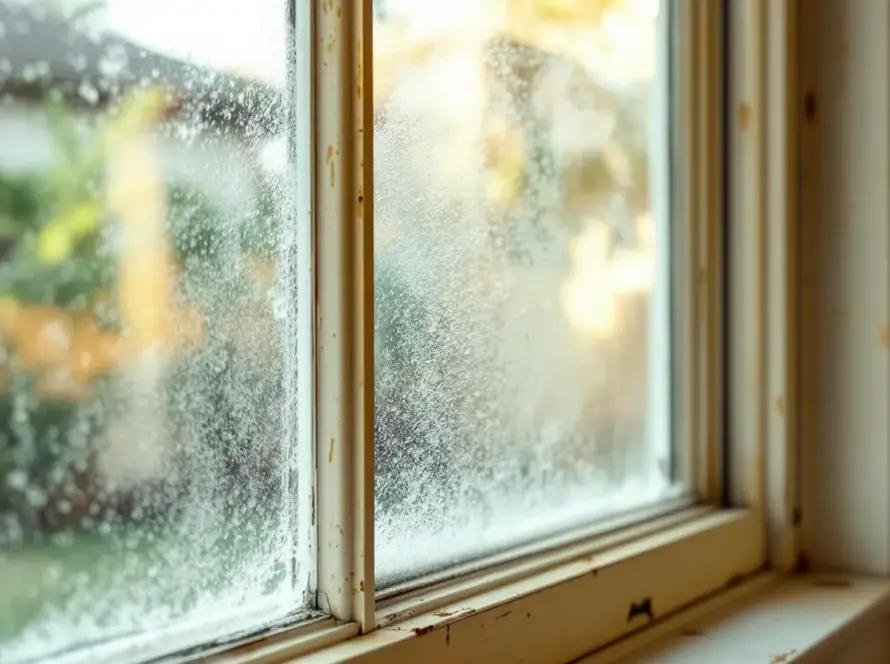
Seal degradation. Double-pane windows use a sealed space between panes to reduce heat transfer. Failed seals can allow moisture or loss of insulating gas and affect performance, but they do not automatically turn every double-pane unit into the equivalent of single-pane glass. Inspect the glass unit and frame before choosing a repair or replacement.
Frame expansion and warping. Aluminum frames — common in older Jacksonville homes — conduct heat efficiently, which is exactly the wrong property in a window frame. Aluminum frames create thermal bridges that transfer outdoor heat directly to the interior. They also expand and contract significantly in Florida's temperature range, eventually creating gaps around the frame perimeter.
Coating and glass condition. Low-E coatings vary by product and placement. Age alone does not prove that a coating has lost most of its performance. Check the product information and inspect visible glass or seal damage rather than assuming a window from a particular year has failed.
How Modern Replacement Windows Work
Today's energy-efficient replacement windows address each of these failure modes with technologies specifically rated for Florida's climate zone.
Low-E Glass Coatings
Low-emissivity (low-E) coatings are microscopically thin metallic layers applied to glass surfaces that selectively filter solar energy. They allow visible light through while reflecting infrared heat — keeping the sun's light in the room without the heat.
For Jacksonville homes, the most important rating is Solar Heat Gain Coefficient (SHGC) — a number between 0 and 1 that measures how much solar heat the window allows in. The lower the number, the less heat enters. For Florida's hot climate zones, look for SHGC of 0.25 or lower.
Modern low-E glass can block up to 72% of the sun's heat energy while still maintaining clear views and natural light. That's the difference between a room that stays comfortable on a July afternoon and one that requires the thermostat dropped three degrees to compensate.
Low-E coatings also protect interior surfaces from UV damage — blocking up to 99% of UV rays that fade hardwood floors, bleach fabrics, and discolor artwork over time.
Double-Pane Argon-Fill Construction
The standard for energy-efficient replacement windows is dual-pane glass with an insulating gas fill — typically argon — sealed between the panes.
The argon gas is a poor conductor of heat, meaning it resists the transfer of temperature between the hot outside glass and the cooler interior glass. Combined with low-E coating on the glass surfaces, this creates a significant thermal barrier that older single-pane or compromised double-pane windows simply cannot match.
In Jacksonville's climate, triple-pane windows are generally not cost-effective — the marginal efficiency gain over quality double-pane low-E doesn't justify the additional cost in a hot-humid climate with minimal heating demand. The better investment is quality double-pane with superior low-E coating rather than adding a third pane.
Vinyl Frames Designed for Florida
Frame material matters as much as the glass in Jacksonville's climate.
Vinyl frames are the dominant choice for Florida replacement windows for good reasons: they don't conduct heat the way aluminum does, they resist warping and rotting in humidity, and they're dimensionally stable in Florida's UV exposure. Multi-chamber vinyl frames — with hollow sections within the frame profile — add an additional layer of insulation.
Aluminum frames, which are common in older Jacksonville homes, are thermal conductors. They create a direct heat bridge from outdoors to indoors along every window perimeter. Replacing aluminum-framed windows with quality vinyl removes that thermal pathway entirely.
Proper NFRC Ratings for Florida's Climate Zone
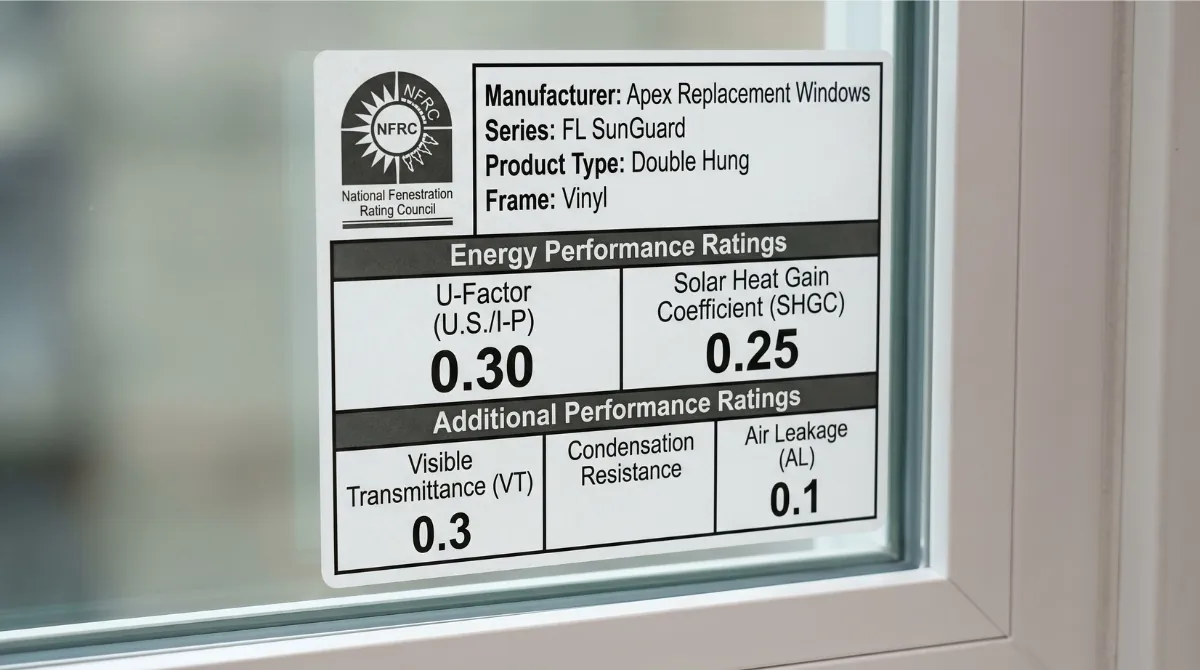
Every replacement window carries standardized performance ratings from the National Fenestration Rating Council (NFRC). For Jacksonville homeowners, the key ratings are:
- U-Factor: Measures insulation — how much heat the entire window assembly (glass + frame + seals) allows through. Lower is better. Target 0.30 or lower.
- Solar Heat Gain Coefficient (SHGC): Measures solar heat entering the home. Lower is better for Florida. Target 0.25 or lower.
- Air Leakage (AL): Measures how much air passes through the window assembly. Lower is better. Target 0.3 or lower.
- ENERGY STAR certification for Southern Climate Zone: Windows meeting ENERGY STAR standards for Florida's climate zone are pre-qualified as meeting minimum performance thresholds for heat and humidity.
Lifetime Windows helps Jacksonville homeowners select windows with the right NFRC ratings for their specific home orientation, age, and energy goals — not just the cheapest or the most expensive option.
What the Savings Actually Look Like
The range of energy savings from window replacement varies based on what you're replacing and what you're replacing it with.
Replacing single-pane windows: According to ENERGY STAR data, upgrading from single-pane to ENERGY STAR certified double-pane low-E windows can save Florida homeowners meaningfully on annual cooling costs. Single-pane windows still exist in older Jacksonville homes and in some converted properties — their thermal performance is dramatically inferior to modern double-pane units.
Replacing older double-pane windows with modern low-E: Savings depend on the condition and ratings of both the original and replacement units, sun exposure, installation, and home envelope. Cooling energy is only part of the total electricity bill, so a cooling reduction cannot be applied to the entire bill without a home-specific calculation.
Comfort improvement beyond the bill: The savings number doesn't capture the full value of efficient windows. Hot spots near south- and west-facing windows on summer afternoons disappear. The AC doesn't cycle on and off constantly. The house holds temperature more consistently. These comfort improvements — often the most immediate thing homeowners notice after replacement — don't show up in the electric bill calculation.
A Note on Tax Credits and Incentives in 2026
The federal Section 25C Energy Efficient Home Improvement Credit, which provided up to $600 for qualifying window replacements, expired December 31, 2025. As of 2026, no replacement federal window tax credit has been enacted. Do not rely on any contractor or source claiming the federal credit is still available — it is not for work performed in 2026.
State and local programs may still be applicable depending on your utility provider and location:
- Duke Energy offers rebates on qualifying window replacements in some Florida service areas
- PACE financing (Property Assessed Clean Energy) is available in some Florida counties and can finance window projects at $0 down, repaid through property tax bills
- My Safe Florida Home program offers matching grants up to $10,000 for qualifying home hardening projects, which may include window upgrades — check current program availability and eligibility
Lifetime Windows can advise on what programs may be applicable to your specific project during your free in-home consultation.
What Installation Quality Has to Do With It
This point is worth emphasizing separately because it's the factor that determines whether your new windows actually perform to their rated specifications.
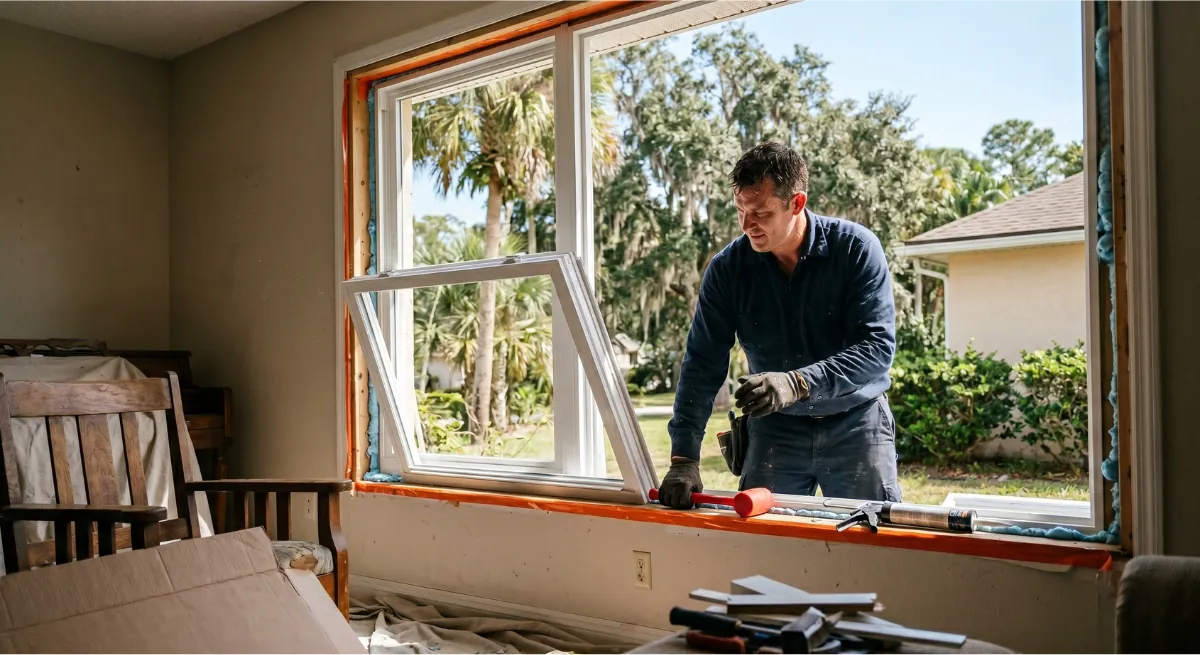
A window's NFRC ratings — the U-Factor, SHGC, and Air Leakage numbers — are measured in laboratory conditions with perfect installation. In the real world, performance depends heavily on how well the window is sealed, flashed, and finished during installation.
Improper installation allows air infiltration at the frame perimeter, moisture intrusion at the sill, and thermal bridging through inadequate insulation around the rough opening. A quality window installed poorly will underperform its ratings. A quality window installed correctly will deliver what it's rated for.
Lifetime Windows uses experienced installation crews on every project — no subcontractors — ensuring that the windows you select perform as rated once they're in your home. That's the commitment behind a free in-home consultation that covers not just the window selection but the installation approach.
Frequently Asked Questions
How much can I save on energy bills with new windows in Jacksonville?
Energy savings vary with the condition of the existing windows, replacement ratings, sun exposure, installation, home envelope, and HVAC use. Replacing single-pane units generally offers a larger opportunity than replacing sound, efficient double-pane units. Request a home-specific estimate rather than relying on a fixed Jacksonville savings percentage.
Are triple-pane windows worth it in Jacksonville?
For most Jacksonville homeowners, no. Triple-pane offers marginally better insulation than quality double-pane but at significantly higher cost. In Florida's hot-humid climate with minimal heating demand, the cost-to-benefit ratio favors quality double-pane with superior low-E coating over adding a third pane.
What SHGC should I look for in Florida replacement windows?
For Jacksonville and the broader Northeast Florida region, target an SHGC of 0.25 or lower. This limits how much solar heat enters the home through the glass — the primary energy performance factor in Florida's cooling-dominated climate.
Is the federal energy efficiency tax credit still available for windows in 2026?
No. The Section 25C federal Energy Efficient Home Improvement Credit expired December 31, 2025. No federal window credit applies to work performed in 2026 as of this writing. State and utility programs may still be available — ask Lifetime Windows about current incentive options during your consultation.
How soon will I notice the difference after window replacement?
Most Jacksonville homeowners notice comfort improvements immediately — particularly reduced heat near south- and west-facing windows on summer afternoons. The energy bill impact becomes clear within the first full billing cycle after installation, though the full seasonal savings picture emerges over the first complete cooling season.
Do I need to replace all my windows at once?
No. Many homeowners phase window replacement, starting with the worst-performing units — typically south- and west-facing windows, or any windows with visible seal failure. Lifetime Windows can help you prioritize based on your home's specific layout and which replacements will deliver the most immediate impact.
How long do vinyl replacement windows last in Jacksonville?
Service life depends on the particular product, installation, exposure, and maintenance. Inspect seals, hardware, frames, and operation rather than relying on a universal lifespan. In some cases an insulated glass unit can be replaced without replacing the whole frame; have the actual condition assessed first.
Start With a Free In-Home Consultation
Lifetime Windows has been serving Northeast Florida homeowners since 1990. We'll come to your home, evaluate your current windows, explain your options clearly, and give you an honest, detailed quote — with no pressure to decide on the spot.
Schedule your free consultation at lifetimewindowsjax.com or call us today. Summer is exactly when you'll feel the difference most.