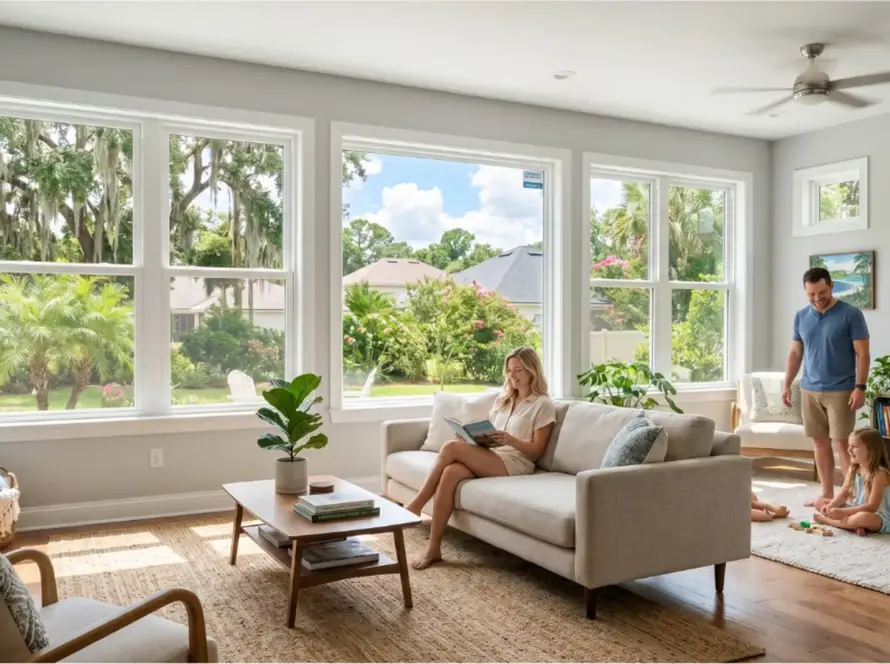
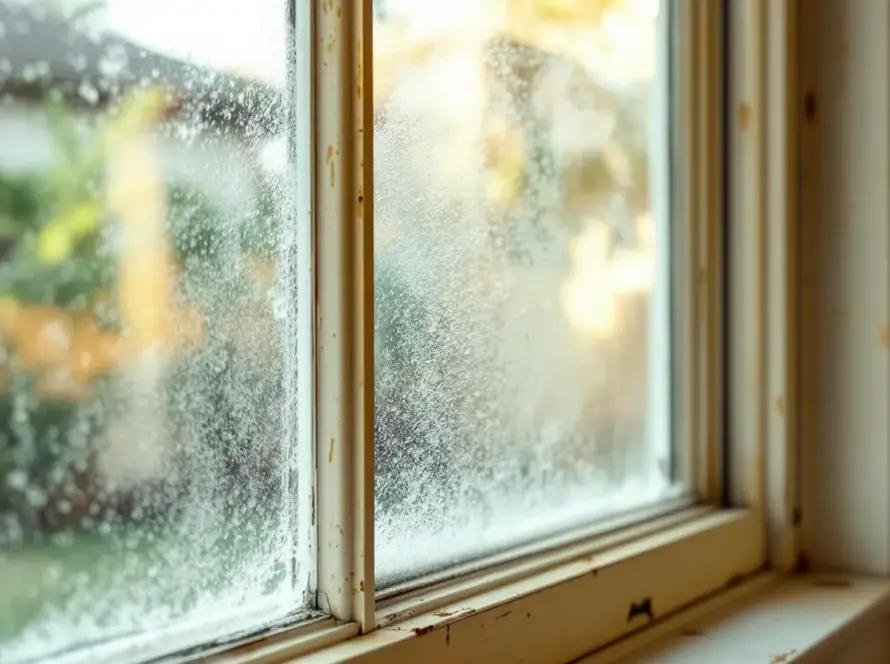
TL;DR
- Low-E (low-emissivity) coatings are microscopically thin metallic layers on glass that reflect infrared heat while allowing visible light through.
- In Jacksonville's cooling-dominated climate, solar-control Low-E coatings can reduce solar heat gain through windows. The importance of that gain relative to other cooling loads depends on the home.
- Low-E coatings can reduce cooling demand compared with otherwise similar clear, uncoated glazing, but this post does not establish a typical 15–25% cooling-energy reduction for Florida homes.
- Not all Low-E coatings are the same — coating type, glass orientation in the IGU, and SHGC ratings all affect Florida performance.
- This post explains how Low-E coatings work, why they matter specifically in Jacksonville, and what to look for in a Low-E replacement window.
If you're researching replacement windows in Jacksonville, "Low-E" comes up in every conversation. Every window company mentions it. Every marketing brochure features it. Most homeowners come out of those conversations knowing they want it without quite knowing what it is or what it does.
This post explains Low-E coatings clearly — the physics, the Florida-specific performance considerations, and how to evaluate what you're actually being quoted.
What Low-E Coatings Actually Are
Low-E stands for "low-emissivity." Emissivity is a measurement of how much radiant heat a surface emits — high-emissivity surfaces (like an unpainted black metal pan) re-radiate a lot of the heat they absorb; low-emissivity surfaces (like polished aluminum foil) re-radiate very little.
A Low-E window coating is a microscopically thin metallic or metal-oxide layer on a glass surface. Its effect on solar heat gain and visible light depends on the coating and the complete glass package; compare product performance ratings rather than treating all Low-E glass as identical.
The result: a suitable solar-control Low-E glass package can reduce solar heat gain while still admitting visible light. How much heat and light pass through depends on the specific product.
The Department of Energy explains that coatings, glazing, frames, gas fills, spacers, climate, and orientation all affect window performance. Compare the whole-window NFRC ratings for the proposed product. Related technical guidance.
Why Low-E Matters Specifically in Florida
Different climates need different window strategies. A home in Minnesota wants windows that minimize heat loss — heat is expensive, and the goal is to keep what's been added by the furnace inside the home. A home in Florida wants windows that minimize heat gain — cooling is expensive, and the goal is to keep solar heat outside.
These are different optimization targets, and Low-E coatings are designed differently for each.
Cold-climate glazing may be selected to admit useful winter solar heat while limiting heat loss. Low-E does not imply a particular SHGC range; evaluate the complete window and the certification applicable to its climate zone.
For Florida applications, select solar-control glazing using whole-window SHGC and U-factor ratings and verify certification for the applicable climate zone. A Low-E label or a generic SHGC range alone does not establish current ENERGY STAR compliance; U-factor remains relevant in hot climates too.
This is why ENERGY STAR certifies windows separately for different climate zones. A window that's ENERGY STAR-certified for Minnesota is not necessarily an appropriate choice for Jacksonville, even though both are technically Low-E products.
The cooling benefit of a Southern-climate Low-E window depends on the original glass, replacement specifications, shading, orientation, and the rest of the home. A general percentage cannot predict the result for your home; ask for a product- and home-specific estimate with its assumptions. Related technical guidance.
The Physics of How Low-E Works
For homeowners who want to understand the mechanics rather than just take the marketing at face value, here's what's actually happening at the window:
Sunlight hitting your window contains three components:
- Visible light is the portion of sunlight your eyes can see.
- Infrared radiation is another component of sunlight and contributes to solar heat gain.
- Ultraviolet radiation is another component of sunlight and can contribute to material fading.
A standard piece of clear glass admits most of all three. The home gets the light, but it also gets the heat and the UV that fades fabrics and damages flooring.
A Low-E coating selectively reflects different portions of this spectrum:
- Visible light: mostly passes through (your view is clear, the room is bright)
- Infrared: transmission and reflection depend on the coating and glass package; use whole-window SHGC to compare solar heat gain.
- UV: protection varies by glass package; request product-specific UV transmission data if fading protection is important.
The specific coating chemistry determines the exact percentages. Manufacturers tune their coatings for specific climate zones — Florida-targeted coatings block more infrared and accept slightly less visible light; Northern-targeted coatings allow more solar heat through while still reducing emissivity.
Low-E coatings can be located on different glass surfaces depending on the glass package. Ask the manufacturer which configuration is proposed and compare its published whole-window ratings; coating position alone does not establish cooling performance.
How Much Low-E Saves on Jacksonville Cooling Costs
Let's translate the physics into bill numbers.
The following bill calculation is an illustrative scenario, not a verified result from an identified University of Florida study or local utility dataset: Related technical guidance.
Illustrative baseline: a 2,200 sq ft Jacksonville home with older clear-glass windows and summer electricity charges of $300/month. Confirm the actual utility serving the address; this amount is an assumed bill, not a typical local benchmark.
Illustrative replacement scenario: assume cooling represents 55% of the $300 monthly electricity charges and replacement reduces cooling energy use by 15–25%. The modeled monthly savings are $24.75–$41.25 for each month those assumptions hold, excluding fixed charges and rate changes. These percentages are unverified sensitivity inputs, not typical Low-E performance; annual savings require a separate month-by-month calculation.
The savings are largest on:
- Sun-exposed windows with high existing solar heat gain, evaluated with their actual orientation and shading
- West-facing windows (highest afternoon heat load)
- Large window areas in living spaces where the AC fights solar gain hardest
- Single-pane to double-pane Low-E upgrades (largest performance jump)
The savings are smallest on:
- North-facing windows (minimal direct sun anyway)
- Heavily shaded windows under deep eaves or trees
- Replacements where the original windows already had basic Low-E (incremental gain only)
These are illustrative calculations, not measured savings or a guaranteed service-life return. Actual annual results and product life depend on the home, product, installation, maintenance, usage, and rates; simple accumulated savings should not be described as compounding investment returns.
Common Low-E Misconceptions
A few things people often get wrong about Low-E:
"Low-E will make my house dark." Visible transmittance varies by product and glass package. Compare the whole-window NFRC VT rating, samples, and the room's daylight conditions rather than assuming a universal VT range or an imperceptible brightness difference.
"All Low-E coatings are the same." Not even close. Manufacturers offer multiple Low-E products with different SHGC and U-factor profiles. The product that's right for Minnesota is different from the product that's right for Florida. Within Florida, products vary by manufacturer, generation, and coating chemistry. Always check the NFRC label numbers, not just whether "Low-E" is on the brochure.
"Low-E coatings wear out." The metallic coatings are between the panes of the insulated glass unit, where they're not exposed to weather, abrasion, or cleaning chemicals. They don't degrade in normal service. What does eventually fail is the seal of the IGU itself — the seal that keeps moisture out and any argon or krypton fill inside. When the IGU seal fails, the glass package needs replacement, but it's the seal that's at end-of-life, not the coating.
"Low-E gives me UV protection equal to museum glass." UV protection varies by coating and glass package. Request the specific UV transmission data if protecting sensitive finishes or artwork matters; a generic Low-E designation does not establish museum-grade protection, and UV is not the only cause of fading.
"Once I have Low-E, I don't need shades or curtains." Window treatments still provide value beyond what Low-E delivers — they provide privacy, they let you adjust light levels by time of day, and they add an additional thermal layer. Low-E reduces the need for treatments to function as primary heat blockers, but it doesn't replace their other purposes.
What to Look for on a Quote
If you're getting estimates that include Low-E windows, here's what should be visible on the product specifications:
NFRC label values:
- SHGC: verify the whole-window rating and current ENERGY STAR certification for the applicable climate zone. A generic 0.25–0.30 recommendation is not evidence of current Southern-zone compliance.
- U-factor: compare the whole-window NFRC rating against the current ENERGY STAR requirements for the applicable climate zone, rather than treating a typical product range as the certification rule.
- VT (Visible Transmittance): compare product ratings and daylight needs. There is no universal VT cutoff that guarantees a room will or will not look noticeably darker.
- Air leakage: ask for the tested whole-window rating and check applicable certification requirements; installation-related leakage also matters.
ENERGY STAR certification for the Southern Climate Zone — this is the specific certification that matters in Florida. ENERGY STAR-certified products for other zones don't guarantee good Florida performance.
Coating designation — manufacturers use proprietary names (Cardinal LoĒ³-366, Guardian SunGuard, etc.). Different products have different performance profiles even within the same brand. Ask which specific coating is being used and what the published performance ratings are.
Glass package details — the position of the coating in the IGU, whether the unit is argon-filled, and the spacer technology used all affect long-term performance.
If a quote uses "Low-E" generically without specific product or coating identification, ask for those details before signing. The variance between Low-E products is large enough that "Low-E" alone tells you only that some coating is being used.
How Lifetime Windows Spec's Low-E
For Jacksonville installations, ask us to identify the exact Low-E coating, glass package, whole-window NFRC ratings, and current ENERGY STAR certification for each proposed product. The product-specific documents, not generic targets, establish performance:
- SHGC: confirm the actual whole-window rating; the previously stated ~0.27 target does not by itself establish current Southern-zone certification.
- U-factor: confirm the actual whole-window rating for the quoted configuration.
- VT: confirm the actual whole-window rating and compare it with your daylight needs.
- ENERGY STAR: verify current certification for the applicable climate zone and exact quoted configuration before purchase.
For homeowners with specific concerns — heavy west-facing solar load, particularly UV-sensitive interior finishes, or large window walls — we'll spec to a different performance target where it makes sense.
We use in-house licensed installation crews and pull permits on every project. We can walk through the specific NFRC labels for any product we recommend, and we'll explain what the numbers mean for your specific home rather than just citing certifications.
For more on whether energy-efficient windows make sense for your situation, our companion post on whether energy-efficient windows are worth it in Florida covers the full cost-benefit framework.
If you'd like to talk through Low-E options for your specific home, schedule a free consultation. For projects that need budget structure, our financing options can help.
Frequently Asked Questions
What's the difference between Low-E coatings rated for hot vs. cold climates? Cold-climate glazing may admit useful winter solar heat while limiting heat loss. Solar-control glazing for hot climates limits solar heat gain. Low-E alone does not establish a specific SHGC or current ENERGY STAR compliance; compare whole-window NFRC ratings and verify certification for the applicable climate zone.
Will Low-E protect my hardwood floors from fading? It can reduce some causes of fading, but the protection depends on the specific glass package. Ask for manufacturer UV transmission data rather than assuming a generic blocking percentage. Visible light, heat, and material sensitivity can also contribute to fading, so Low-E glass does not guarantee protection for floors or artwork.
Can I add Low-E coating to my existing windows? Factory Low-E coatings are part of the manufactured glass product. Aftermarket films and other retrofit options are different products and should be evaluated using their published performance, compatibility, installation requirements, and warranty terms. Do not assume that full window replacement is the only useful efficiency option.
How can I tell if my existing windows already have Low-E coating? Check the original NFRC labels, product paperwork, or manufacturer and model details. A manufacturer or qualified window professional can help identify the glass package. Do not rely on a flame test to establish the coating type, energy rating, or certification.
Does Low-E glass affect cell phone or Wi-Fi signals? Yes, slightly. Low-E coatings contain metallic compounds that can attenuate some radio-frequency signals passing through the glass. The effect is generally minor — most cell phone reception works normally through Low-E windows, and Wi-Fi signals pass through with reduced strength rather than blocked entirely. In homes where window orientation matters for signal reception (cell signal coming from a specific direction), the effect can be noticeable. Specialized "RF-transparent" Low-E products exist for cases where signal transmission is critical.
How much extra does Low-E cost compared to standard glass? Ask for itemized prices for comparable window configurations. Low-E is available in many replacement products, but its price and whether it is included vary by manufacturer and package. Double-pane glass, argon fill, and a Low-E label alone do not establish ENERGY STAR certification or the best value for a particular home.
Considering Low-E windows for your Jacksonville home and want a clear-eyed evaluation of the right product for your specific situation? Contact Lifetime Windows for an honest consultation.