TL;DR
- The brand of window you choose matters far less than the crew installing it. A premium window installed badly fails faster than a mid-range window installed correctly.
- In Florida's humidity and heat, installation defects show up faster than national lifespan estimates suggest—sometimes within months.
- Poor installation can contribute to seal failure, water infiltration, and warranty disputes. Product defects, age, and maintenance can also affect performance; warranty terms vary by manufacturer.
- Florida window replacement must be performed by a contractor whose active license covers the work and jurisdiction. Verify the license before signing.
- The single question that reveals more than any spec sheet: "Are your installers W-2 employees of this company, or are they subcontractors?"
Every spring in Jacksonville, the calls start. Homeowners who replaced their windows three or four years ago—sometimes less—are dealing with fogged glass and drafts they can feel from across the room, and energy bills that haven't budged. In most of those cases, the windows themselves aren't the problem.
The install was.
Here's the thing most window companies don't say out loud: window installation quality determines long-term performance more than the brand on the label. The glass specs, the frame material, the low-E coating, the argon fill — none of it matters if the rough opening wasn't prepped properly, the flashing was skipped, and the perimeter wasn't sealed correctly.
In Florida, this problem hits harder than it does anywhere else. The combination of heat, humidity, daily thermal cycling, and summer rainstorms that defines Jacksonville's climate is genuinely relentless on anything that wasn't installed with precision. And because most installation failures hide inside the wall for months before they become visible, the damage is often significant by the time anyone notices.
This post breaks down what separates a good window installation from a bad one, what the real failure risks are in Northeast Florida, and what to ask before you hire anyone to put their hands on your home.
Why Installation Quality Matters More Than Glass Specs in Florida
Walk into any window showroom in Jacksonville and you'll spend most of your time talking about products. U-factors. SHGC ratings. Frame materials. Double-pane versus triple-pane. Low-E coatings. These things aren't irrelevant — but they're not the primary factor that determines whether your investment holds up for 20 years.
The primary factor is what happens on installation day.
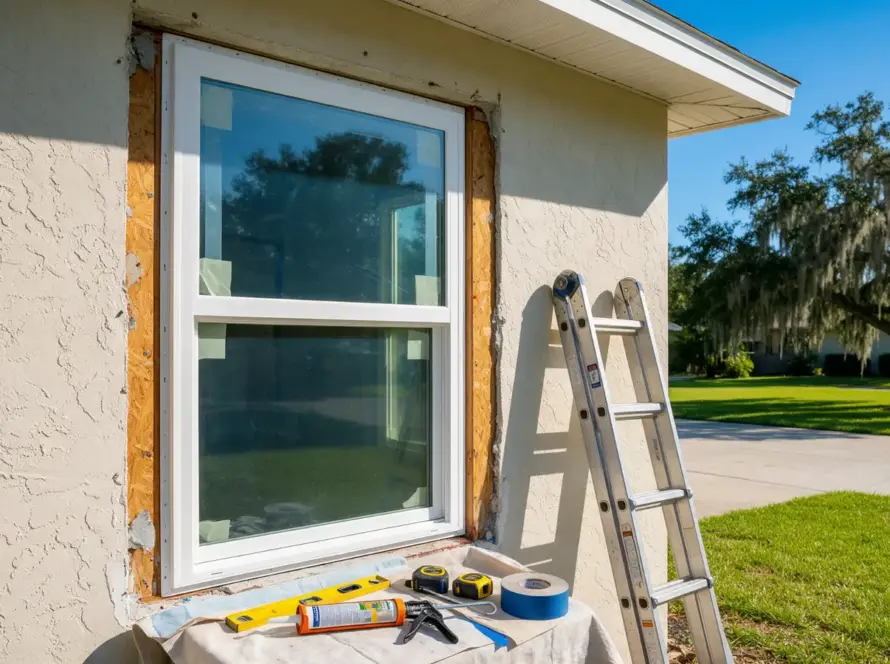
A window sits inside a rough opening in your wall. For it to perform the way it was designed — to hold its insulating properties, shed water properly, resist air infiltration, and operate smoothly — every step of the installation has to be done correctly. That means:
- The rough opening is measured and prepped before the window goes in
- The unit is shimmed level, plumb, and square
- Flashing is installed to direct water away from the frame and out of the wall
- The perimeter is sealed with appropriate materials, applied correctly
- Insulation around the frame is installed without gaps that create thermal bridging
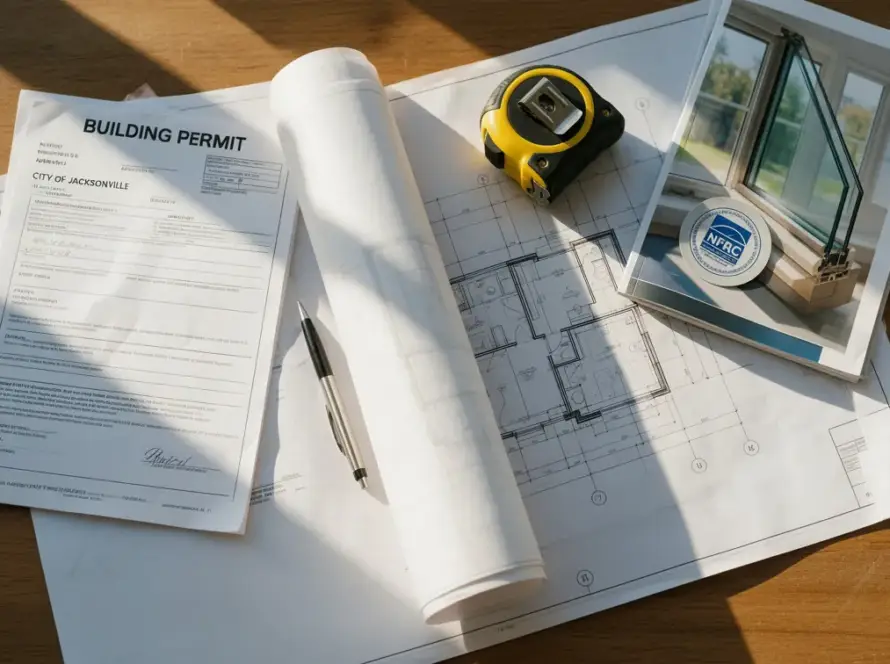
- Permits are pulled and inspections completed
Skip or shortcut any of those steps and you've started a clock. Sometimes it runs out in months. Sometimes it takes a few years. Either way, the result is the same: a window that underperforms, and a warranty that may not cover the damage — because improper installation is typically an explicit exclusion in most manufacturer warranties.
The U.S. Department of Energy puts it plainly: even the most energy-efficient window must be properly installed to ensure energy efficiency and comfort, and installation that doesn't follow the manufacturer's instructions may void the warranty entirely.
What Bad Installation Actually Does to Your Home
The failure modes from a rushed or unskilled installation aren't subtle once they show up. Here's what improper installation typically produces over time.
Seal failure and foggy glass
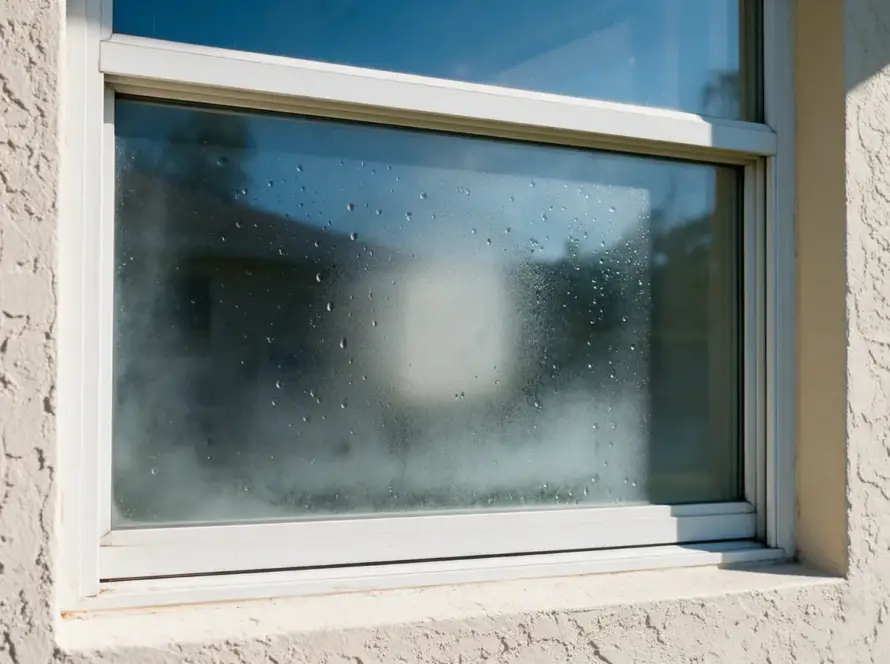
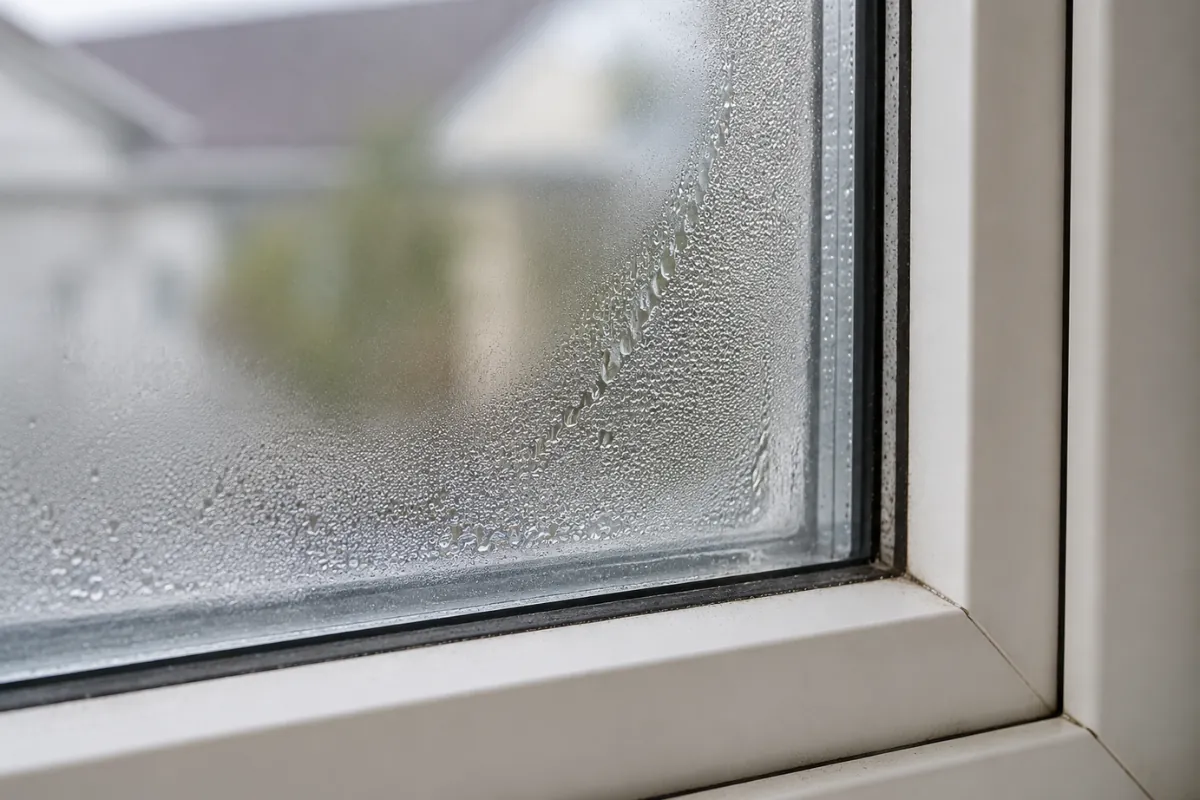
When a window isn't shimmed correctly or the rough opening puts stress on the frame, the insulated glass unit can be compromised from the start. The seals between the panes weaken. Humid air works its way inside. Condensation forms between the glass — the kind that won't wipe away — and the window loses its thermal performance permanently. At that point, the only fix is replacement.
In Jacksonville's climate, this can happen faster than national lifespan estimates suggest. Florida heat accelerates material degradation, and the daily humidity cycle puts constant stress on seals that weren't seated correctly to begin with.
Water infiltration and hidden rot
This is the failure mode experienced contractors worry about most. Water that gets into a poorly installed window doesn't announce itself. It travels inside your wall, soaking insulation, softening framing, and creating exactly the conditions mold needs to grow. By the time you see staining on drywall or feel softness around a frame, the damage behind it may already be extensive.
A window that looks fine from the inside can be actively rotting the structure around it. Jacksonville's summer rain season — with afternoon thunderstorms that can dump inches of water in an hour — means a single compromised flashing point gets tested constantly throughout the wet season.
Drafts and energy loss
Air infiltration through gaps around an improperly sealed frame is immediate and measurable. You can feel it standing near the window on a hot afternoon. Your AC runs longer trying to compensate. Your energy bills don't improve the way they were supposed to after the replacement.
The frustrating part is that most homeowners assume this means they bought the wrong window. Often, the window is fine. The opening around it isn't.
Operating problems and structural stress
A window that isn't properly leveled and shimmed puts stress on its own hardware from day one. Locks don't catch cleanly. Sashes stick or bind. Over time, the frame can rack in the opening, making the window difficult or impossible to operate. None of that is the product's fault.
Florida Licensing Requirements for Window Installers
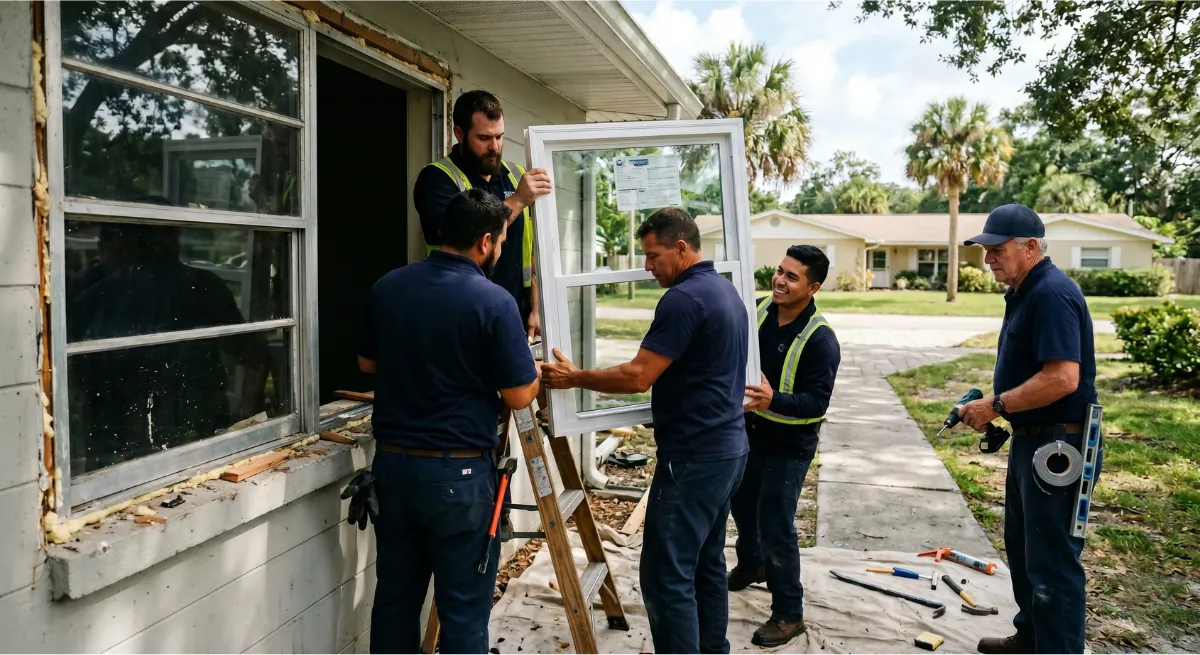
Florida window replacement must be handled by a contractor whose license covers the proposed work. Verify the active license, authorized scope, and jurisdiction through DBPR and the local building department. Appropriate broader contractor licenses may also cover window replacement.
State-certified contractors may work statewide; registered contractors generally work within the jurisdictions covered by their registration. Florida restricted which local specialty licenses governments may issue effective July 1, 2025; it did not eliminate every registered or local licensing pathway. Verify the contractor's current authorization for your project.
Before signing a contract with any window company, verify their license through the Florida Construction Industry Licensing Board. It takes about 90 seconds and confirms whether the license is active and whether there's any disciplinary history.
This matters in Jacksonville specifically. The spring and summer surge in window projects brings out a lot of operators cutting corners on compliance. The companies running the lowest bids often aren't carrying full insurance, aren't pulling permits, and aren't sending licensed crews to your home.
In-House Installers vs. Subcontractors: The Question That Reveals Everything
Here's one of the most important questions to ask any window company before hiring them:
"Are the people who will install my windows your employees, or are they subcontractors hired per job?"
This isn't a gotcha question. It's a practical one. When a company uses in-house, W-2 employees for installation, those crews are trained specifically to the company's standards, supervised by the company's managers, and directly accountable when something goes wrong. The company owns the outcome.
When a company subs the work out, the accountability picture gets blurry fast. The subcontractor's license may differ from what the sales rep implied. Their training may not match the product being installed. And when you call to report a problem, there's a real risk of being caught between two parties pointing at each other.
Lifetime Windows uses in-house licensed installers — not subcontractors. The crew that shows up at your home is trained to our standards, covered under our licensing, and answerable to us, not to a third party with a separate relationship to the work.
5 Questions to Ask Any Window Company Before You Sign
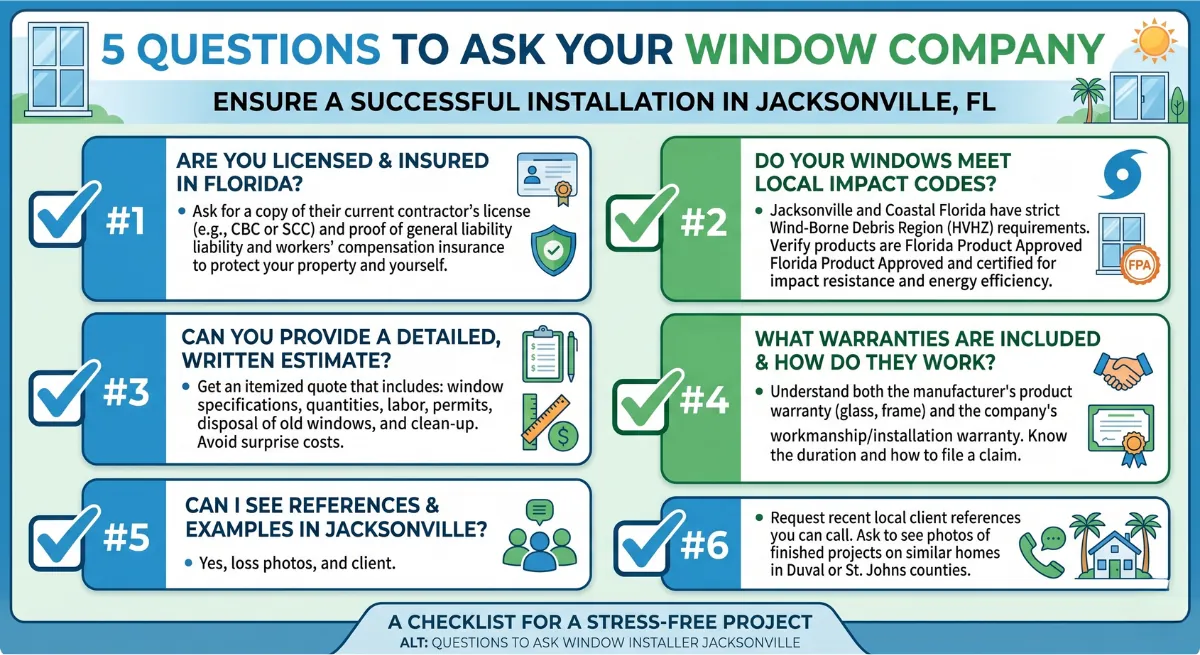
You don't need to be an expert in window installation to protect yourself. These five questions will tell you most of what you need to know.
1. Are your installers employees or subcontractors? Direct answer required. Evasion or hedging is a red flag.
2. Will you pull the permit for this project? Window replacement in Duval County requires a permit. If a company suggests skipping it to save time or money, walk away.
3. What does your installation warranty cover, and who backs it? Manufacturer warranties only cover the product itself — and often only when installed by a certified contractor. ENERGY STAR notes that some manufacturers will void the warranty if installation doesn't follow their instructions, and some require an installer certified by the manufacturer. Ask specifically what the company warrants on the labor side, and for how long.
4. Can I see your DBPR license number? Any legitimate company provides this without hesitation. Verify it yourself through the state's contractor licensing portal. Active license, clean disciplinary record, scope that matches the work — those are the three things you're checking.
5. How do you handle flashing and sealing around the frame? A contractor who knows what they're doing answers with specifics: flashing membrane, waterproof barrier, sealant type, foam insulation approach around the perimeter. Vague answers are telling.
What This Looks Like in Practice
A homeowner in Mandarin gets three quotes. Two are within $800 of each other from companies she hasn't heard of. The third is from Lifetime Windows — slightly higher, uses in-house installers, pulls permits on every job, and walks her through the installation process step by step during the consultation.
She goes with one of the lower bids. Eighteen months later, she's got condensation between two panes and a soft spot developing in the drywall beneath the window. The company she hired is no longer responsive. The manufacturer won't honor the warranty because installation records don't exist. She's paying out of pocket for repairs that cost more than the difference between the three original quotes.
This is an illustrative scenario, not a documented Lifetime Windows customer case. It shows why installation records and written warranty terms deserve attention.
The window itself — the brand, the glass specs, the frame material — matters. We're not saying it doesn't. But the single biggest variable in whether your window performs for 20-plus years in Florida's climate is the skill, training, and accountability of the person who installs it.
What to Expect From a Professional Installation
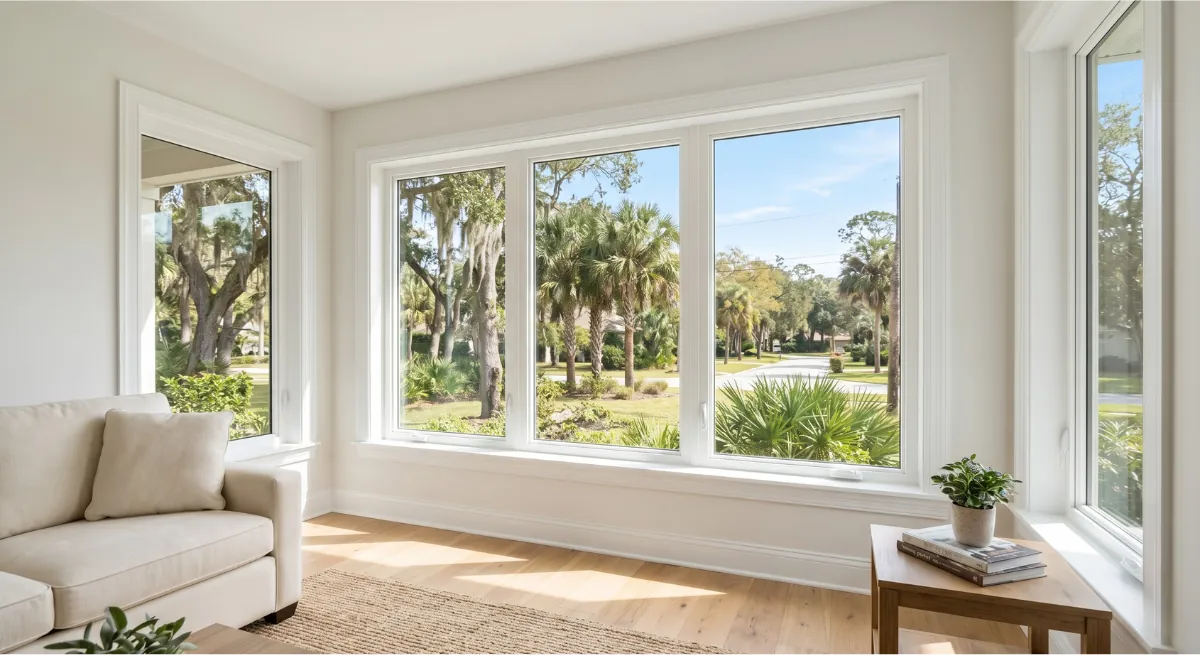
When a qualified, licensed crew installs your windows correctly, here's what the process looks like:
- Pre-installation: measurements are verified against the ordered units before arrival. Any discrepancies are addressed before install day.
- Old windows are removed carefully, and the rough opening is inspected for existing water damage or structural issues before proceeding.
- The new window is shimmed level, plumb, and square — confirmed with a level before any fastening.
- Flashing is applied to manage water drainage away from the frame.
- Insulation is packed around the perimeter without gaps.
- Interior and exterior casing and trim are sealed cleanly.
- The window is operated through its full range of motion before the crew leaves.
- A permit inspection is completed.
That process takes longer than a rushed crew can complete in a morning. It's also the reason windows installed this way perform for decades.
The precision matters even more for certain product types. Take our casement window options — casement windows create their seal through compression when closed. If the install is off by even a small margin, you lose the airtight performance that makes them worth having in the first place.
The Bottom Line
Window shopping tends to focus on products. That's understandable — manufacturers spend heavily on marketing glass specs, and it's easy to compare numbers on a spec sheet.
But in Jacksonville, where humidity averages over 75% year-round and summer rainstorms are relentless, the question that actually determines how your investment performs is simpler: who's installing them, and are they doing it right?
Ask the questions above. Verify the license. Find out whether the installers are in-house. And if a quote seems suspiciously low compared to others you've received, consider what's being cut to hit that number.
Ready to see what a thorough, licensed installation looks like? Request a free consultation and we'll walk you through our process from measurement to final inspection. If you're planning a full project, ask about our financing options — there's no reason to compromise on quality to make the budget work.
Frequently Asked Questions
Can bad window installation void my manufacturer warranty? Improper installation can affect warranty coverage, especially when it does not follow manufacturer instructions. Some manufacturers require a certified installer. Review the written warranty for the specific product and claim; licensing or permit problems do not automatically invalidate every product-defect claim.
How do I know if my windows were installed correctly? Some signs are immediate: difficulty operating the window, visible gaps between the frame and wall, drafts near the frame when the window is closed. Others develop over time: condensation between the panes, water staining near the frame or on the interior wall beneath the window, and rising energy bills despite the replacement. If you're seeing any of these, schedule a professional inspection before the issue progresses.
What's the difference between a certified and registered window contractor in Florida? A certified contractor holds a statewide DBPR license. Registered contractors generally work within the jurisdictions covered by their registration. Changes to local specialty licensing did not eliminate every registered or local licensing pathway. Verify active license status, scope, and jurisdiction before hiring.
Do window installers need to pull a permit in Jacksonville? Yes. Window replacements in Duval County require a permit. The permit triggers an inspection that verifies the installation meets Florida Building Code requirements, including wind resistance specifications. Companies that offer to skip the permit are operating illegally and leaving you without verified code compliance, which can create problems during a home sale or insurance claim.
Why does installation quality matter more in Florida than in other states? Florida's climate is harder on windows than most of the country. High humidity levels put constant pressure on seals and frame materials. Daily heat cycling causes expansion and contraction that stresses anything not properly seated. Summer rain is frequent and heavy. And for homes near the coast or in high-wind corridors, the stakes of a compromised install are higher for both energy performance and storm resilience.
Is it worth paying more for in-house installers? For most Jacksonville homeowners, yes — particularly on full replacements. With in-house crews, accountability is clear. If something goes wrong, the company that sold you the window and the company responsible for the installation are the same entity. With subcontractors, disputes about responsibility can complicate and delay repairs. The upfront cost difference is usually modest compared to addressing an installation failure two or three years down the road.
Ready to get your windows installed correctly the first time? Contact Lifetime Windows for a free in-home consultation in Jacksonville and throughout Northeast Florida.